

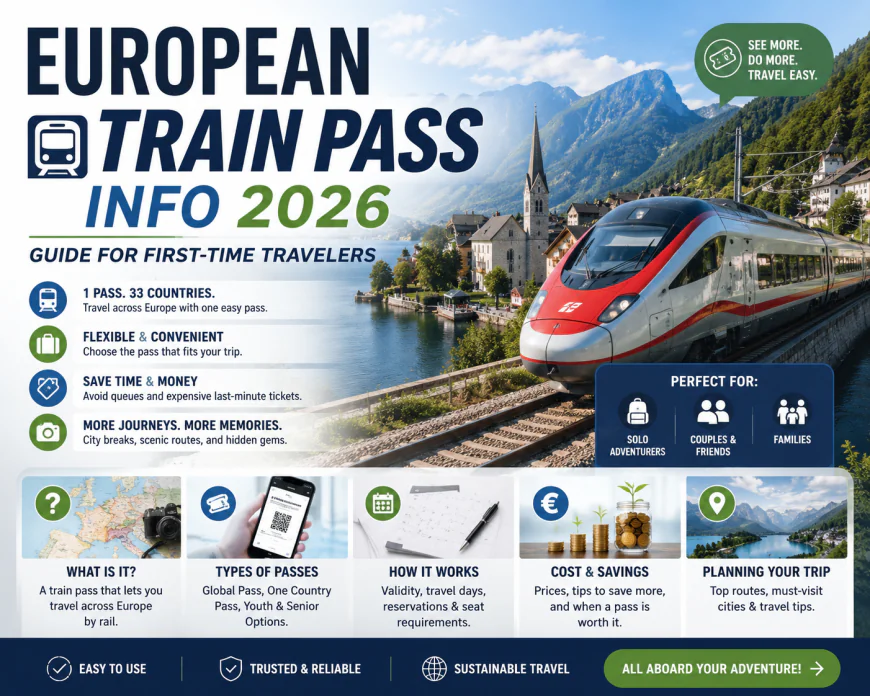
Planning a multi-country trip through Europe is one of the most rewarding travel experiences you can have — and getting the right European train pass info before you book can save you both money and unnecessary stress. Rail travel connects dozens of countries seamlessly, but the pass system comes with its own set of rules, options, and fine print that can feel overwhelming at first. This guide breaks it all down in plain language so you can make a confident decision.
A European train pass — most commonly associated with Eurail — gives travelers the flexibility to board trains across multiple countries without purchasing individual tickets for every leg of the journey. Rather than locking you into a fixed itinerary, a pass lets you move as your trip evolves. You pay once (or in stages) for a set number of travel days or a continuous period, then validate the pass each time you board.
The Eurail Global Pass covers 33 countries and is the most popular option for travelers who want the freedom to cross borders on a whim. There are also single-country passes — Eurail’s national passes — which are worth considering if your itinerary stays mostly within one destination, such as France, Italy, or Germany.
For 2026, Eurail continues to offer two main structures: continuous passes and flexi passes. A continuous pass covers every day within a chosen window — 15 days, 22 days, one month, two months, or three months. This works best for travelers who plan to move frequently, perhaps every day or two. A flexi pass, on the other hand, gives you a set number of travel days (such as 5, 7, 10, or 15 days) to use within a two-month window. Days when you stay put don’t count against your total.
Both structures come with different pricing tiers based on age. Travelers under 28 qualify for youth fares, which are noticeably cheaper than adult rates. Those 60 and older can access senior discounts. Families traveling with children under 12 can often add them to an adult pass at no extra cost, though terms vary slightly by route and year.
Pricing for 2026 passes varies widely depending on your age bracket, pass type, and travel class. As a general reference, a Eurail Global Pass for an adult in second class runs from approximately €185 for a 4-day flexi pass up to €700 or more for a 3-month continuous pass. First-class options typically cost 30 to 50 percent more than second class. These figures can shift each season, so it’s worth checking the official Eurail website for the most current pricing before committing.
One thing many first-time travelers overlook is the reservation fee. On high-speed and overnight trains — such as the Thalys, Frecciarossa, or Eurostar — a seat reservation is mandatory even with a valid pass. Reservation costs typically range from €3 to €40 per leg depending on the train and route. Budgeting for these add-ons will help you avoid surprise costs during the trip.
Eurail passes are sold directly through Eurail.com as well as through licensed travel agents and several third-party booking platforms. Prices are standardized, so you won’t typically find a cheaper rate by shopping around — but some agents do offer added perks like free timetable booklets or bundled reservation help.
Since 2020, Eurail has moved entirely to a mobile pass system through the Eurail Rail Planner app. Physical paper passes are no longer issued. Once you purchase your pass, you download the app, activate the pass before your first travel day, and add each journey digitally before boarding. It’s a clean system once you get the hang of it, though first-time users should take a few minutes to practice navigating the app before their trip begins.
A rail pass is not automatically the cheapest option for every traveler. If your itinerary involves just two or three stops and you book individual tickets well in advance, point-to-point fares can sometimes undercut the pass price significantly. Budget carriers like Flixbus and Ouibus also offer low-cost alternatives for certain routes where speed isn’t a priority.
That said, a pass offers real value for travelers who want flexibility, plan to make last-minute route changes, or are visiting five or more countries. The freedom to hop on a train without worrying about booking windows is genuinely useful, especially for first-time visitors who haven’t solidified every detail of their itinerary.
Start by mapping out your rough route before purchasing. Even a loose itinerary will help you decide between a flexi or continuous pass and choose the right number of travel days. Opting for second class almost always makes sense for budget-conscious travelers — European second class is comfortable on most routes and indistinguishable from first class on shorter regional trains.
Night trains are one of the best-kept secrets of European rail travel. Routes like Vienna to Venice or Paris to Barcelona let you travel while you sleep, saving both time and accommodation costs. Most overnight services still require a separate reservation, but the berth cost is usually far less than a hotel room. Book these early, as sleeper berths fill up quickly during peak season.
Download the Rail Planner app and explore its offline timetable feature before you leave home. Internet access can be spotty in certain tunnels or rural stretches, and having offline access to schedules means you can plan connections confidently even without a signal.
Solid European train pass info is the foundation of a well-planned rail trip. Once you understand the pass types, know what reservation fees to expect, and have the Rail Planner app loaded on your phone, the rest of the planning process becomes a lot more enjoyable. Europe’s rail network is one of the finest in the world — and a well-chosen pass puts the full breadth of it within reach. Whether you’re spending two weeks weaving through Western Europe or three months exploring every corner of the continent, the right pass makes the journey as memorable as the destinations themselves.