

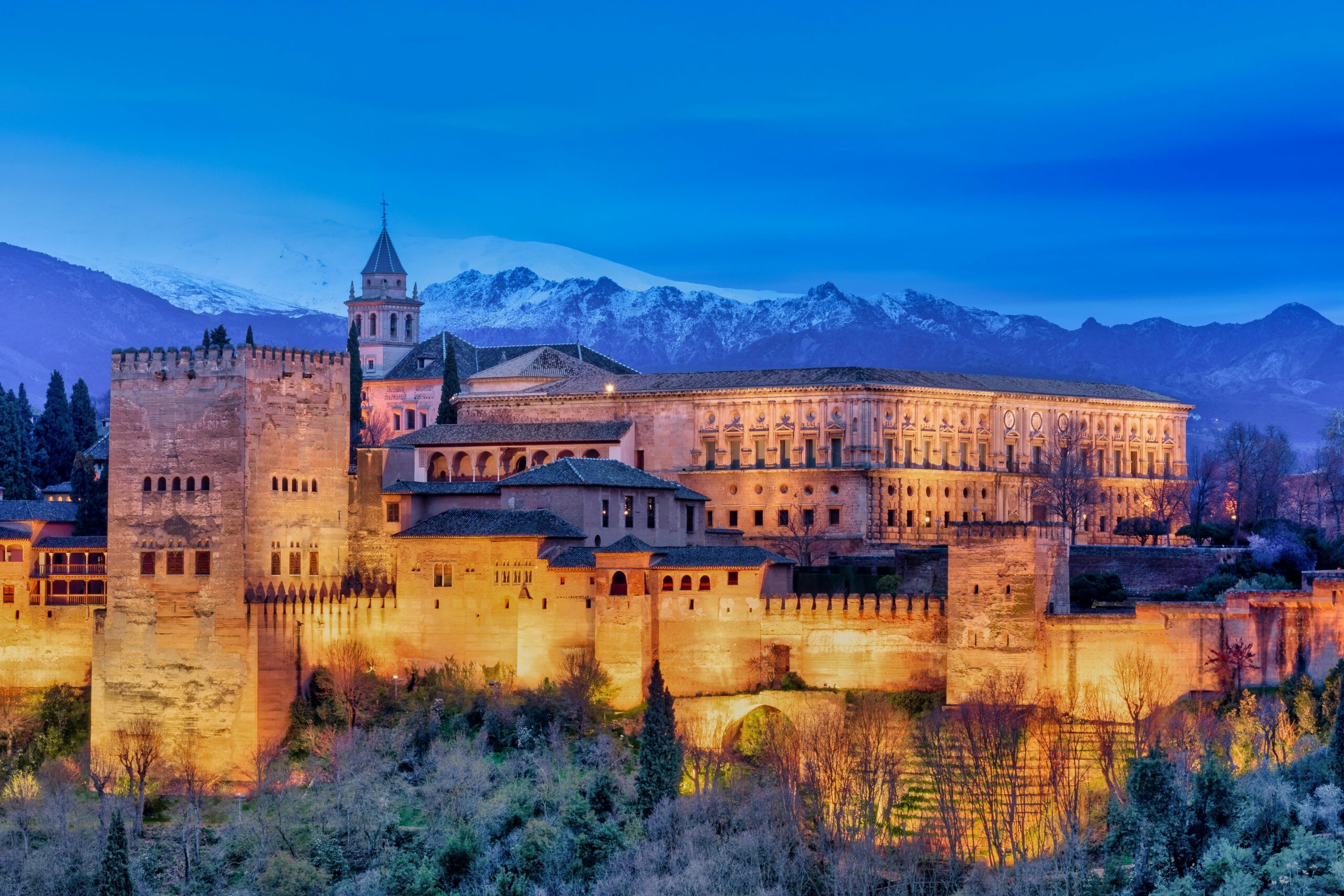
There are landmarks in Europe that are impressive and landmarks that are genuinely life-changing, and alhambra spain falls firmly in the second category for most visitors who make the trip. Sitting in the southern region of Andalusia, this 13th-century Moorish palace complex has been drawing travelers from around the world for centuries and remains one of the most visited monuments on the entire continent. For American travelers planning a first trip to Spain, understanding what makes the Alhambra significant, how to visit it properly, and what to expect when you get there is essential for getting the most out of the experience. Here’s everything you need to know.
The UNESCO World Heritage designation that covers alhambra spain was awarded in 1984 and applies to the Alhambra, the Generalife, and the historic center of Granada. The recognition was granted based on the complex’s outstanding universal value as a masterpiece of Moorish architecture and as a testament to the civilizational exchange between Islamic and Christian cultures that shaped the Iberian Peninsula over nearly eight centuries. The Nasrid Palaces inside the complex are considered among the finest examples of Islamic architecture in the world, representing a peak of artistic and technical achievement in geometric tilework, plasterwork, and the integration of water into architectural design. The site also holds enormous historical significance as the location where the last Moorish kingdom in Europe ended in 1492, the same year Columbus sailed for the Americas with the blessing of Ferdinand and Isabella at the Alhambra.
Timing a visit to alhambra spain to avoid the worst of the crowds requires some advance planning. The peak tourist season runs from late March through early September, with April, July, and August being the busiest months overall. Spring break in March and Easter week bring heavy European tourist traffic on top of the year-round international visitor flow. The best months for a relatively uncrowded visit are November, December, January, and February, when the site is significantly quieter, though the gardens are less vibrant and the weather can be cool and occasionally rainy. March and October are the best shoulder season options, offering manageable visitor numbers combined with genuinely pleasant weather and good conditions for photography. The daily visitor cap means the crowds inside the Nasrid Palaces are always controlled, but the surrounding paths and gardens feel noticeably more spacious and enjoyable during quieter months.
Getting to alhambra spain from other major Spanish cities is very manageable. From Seville, the most convenient option is the high-speed AVE train, which takes about 45 minutes from Seville to Antequera-Santa Ana station, followed by a connecting regional train to Granada, with total journey time of around two and a half hours. Direct buses between Seville and Granada take about three hours and are operated by ALSA with comfortable coaches and reliable schedules. From Madrid, the AVE train connects to Granada in about three and a half hours. From Malaga, a regional train or bus takes between one and two hours depending on the service. Granada does not currently have a major international airport, so most American travelers fly into Malaga, Seville, or Madrid and connect from there. Malaga is the closest major airport at roughly 90 minutes from Granada by bus or car.
The full alhambra spain general admission ticket covers access to the Nasrid Palaces, the Alcazaba, the Generalife gardens, and the Palace of Charles V with its two museums. This ticket is the one most visitors purchase and it covers everything you need to see for a complete visit. Night visit tickets for the Nasrid Palaces and for the Generalife gardens are sold separately and operate on different schedules from the daytime ticket. The night visit is not automatically included with a daytime ticket, so if you want to experience both the day and night versions of the complex, you need two separate bookings. Some guided tours include their own ticket allocation as part of the tour price, while others require you to have a separately purchased ticket that the guide supplements with their commentary. Always confirm what is included in any tour package before completing your purchase.
alhambra spain is one of the most photogenic places in Europe and knowing the best spots before you arrive helps you make the most of your time there. The Court of the Lions in the Nasrid Palaces is the most iconic interior shot, best photographed in the morning when soft light enters the colonnaded arcade from the east. The reflecting pool in the Court of the Myrtles produces mirror images of the arches and towers above, particularly striking in the early morning when the water surface is still. From the Torre de la Vela at the top of the Alcazaba, the views over the rooftops of the Albaicín with the Sierra Nevada in the background are among the most reproduced images in all of Spain. The Generalife gardens photograph beautifully in spring when the roses and cypress trees are at their best. The Mirador de San Nicolás in the Albaicín neighborhood across the ravine gives you the classic full-face view of the Alhambra that appears on virtually every postcard of Granada.
In a country with an extraordinary density of historical landmarks, alhambra spain stands at the very top of most informed travelers’ lists. It is more architecturally distinct and more historically significant than most other monuments in Europe, let alone Spain alone. The Sagrada Família in Barcelona is a stunning work of modern architecture but is still under construction. The Prado Museum in Madrid contains one of the world’s greatest art collections but is not an architectural monument in the same way. The Cathedral of Seville and the Alcázar of Seville are both outstanding and the Alcázar in particular shares Moorish architectural roots with the Alhambra, but neither matches the scale, the completeness, or the historical depth of the Alhambra complex. Among world heritage sites globally, the Alhambra is frequently mentioned alongside the Taj Mahal and the Colosseum as one of the most extraordinary man-made structures on earth.
A few things about alhambra spain that most visitors don’t know ahead of time are worth sharing. The Nasrid Palaces are the busiest section by far, but the Alcazaba is often relatively empty even when the Nasrid Palaces are at capacity, making it a great place to start your visit and get oriented without crowds. The official Alhambra app is free, works offline, and provides excellent audio commentary for each section, making it a genuinely useful alternative or supplement to a paid audio guide device. The exit from the complex near the Puerta de la Justicia leads down through a wooded path to the city below, which is a more scenic and interesting route than returning the way you came. https://www.travelosei.com/hello-india/alhambra-palace-night-tour-attendance-revenue
FAQs
How do I get official tickets for alhambra spain?
Purchase tickets through the official Patronato de la Alhambra website at alhambra-patronato.es. This is the only source for official tickets with guaranteed Nasrid Palace timed entry slots.
Is alhambra spain free for any visitors?
Children under 12 are admitted free of charge. EU students and certain other categories may be eligible for reduced or free entry on specific days. Check the official website for current eligibility details.
Can I visit alhambra spain multiple times on the same ticket?
No, the general admission ticket is valid for a single entry on the date specified. Once you exit the complex, re-entry is not permitted on the same ticket.
What happens if I miss my timed entry slot for alhambra spain?
Missing your Nasrid Palace timed entry slot typically means losing access to that section for the day. The staff at the entrance may have limited flexibility in exceptional circumstances but this cannot be relied upon.
Is there a dress code for visiting alhambra spain?
There is no official dress code for the Alhambra. However, comfortable and modest clothing is generally appropriate for visiting a site of this cultural and historical significance.